Friday, 5 April 2013

Time For An Ad Break

You have to say Rory McIlroy's "performance" in those Santander ads is painful to watch. He looks as comfortable as George Osborne in a Poundland store. But there's nothing new about sportsmen and women taking the advertiser's pieces of silver.
George Best more than most. Here's a sixties ad for an aftershave called Fore. Which is surely the wrong sport. He's not even using his feet.


The one I remember growing up, though, is his ads for Cookstown Family Sausages. I think that might even be his mother giving him said sausages here.


For a proper Ulster fry-up you'd need some eggs to go along with those sausages. So here's another Best appearance. He gets lines in this one and it's quickly evident that he's clearly more a natural than Rory. All together now: E for B and Georgie Best


Wednesday, 30 January 2013

Magnifico, magnifico, magnifico

I can't pretend that I read everything that Malcolm Brodie ever wrote - we were never Belfast Telegraph readers in our house - but it's difficult to imagine a journalist with a greater association with Northern Irish sport and the Northern Ireland international team than Malcolm.
It was only on reading of his death at the age of 86 yesterday that I realised he was originally from Glasgow. But he was evacuated during the Second World War and, astonishingly, he started work at the Tele as far back as 1943. My dad would have been six then.
Malcolm covered 14 World Cups in his career. Northern Ireland took part in three of them. And he continued working well into his ninth decade. I remember seeing him in the press room at Windsor Park just before Northern Ireland's disappointing World Cup qualifier against Slovakia in 2009, ready as ever to go to work.
Thinking about it, his career encompassed the entire span covered in Whose Side Are You On? From the end of Belfast Celtic to the rise of Rory McIlroy.
He makes only a passing appearance in the book. I talk of him writing about the start of the 1969 football season as if it was just another season. Within days Irish League matches were being postponed because of rioting. He saw the best and worst of Northern Irish sport then. And he never lost his appetite for it.

Saturday, 12 January 2013

In another place


In today's Herald Magazine I've written a piece about Derry-Londonderry becoming City of Culture. There is a passing mention of the city's  two football teams - Derry City and Institute - but it's not about sport. Still, if you're reading this you might be interested in some of the issues it talks about.
It's also reasonably positive, which may seem a bit perverse given the current Flag protests, but it seems worth talking about how things have changed in Northern Ireland just to remind ourselves that we're not in the same place we were in 20, 30, 40 years ago.
You can  read it here.

Saturday, 5 January 2013

Calling the shots


I've been ignoring this blog of late. I've been thinking of other things and so this venue is taking a bit of a back seat. I'm only going to post on designated days. 
But just to keep it ticking over I thought I'd let you read this piece that was published a few weeks ago in the Sunday Herald. It's an interview I did with the doyen of snooker writers Clive Everton, about the sport he's been covering for decades. Alex Higgins and Dennis Taylor turn up in it. If you like snooker, Everton's book is well worth a read.


The story of snooker is also the story of Clive Everton.
Anyone who knows the sport knows that. Everton is 75 now. He has edited Snooker Scene magazine for 41 years ("man and beast"). He has seen the sport rise from little more than nothing to briefly become one of the biggest sports in Britain three decades ago before falling away again through incompetence and corruption. He has written about snooker, commentated on snooker, played snooker, been sued by snooker (or the sport's governing body, the World Professional Billiards and Snooker Association, the WPBSA, at any rate). He has seen the good, the bad and Bill Werbeniuk.
Five years ago he wrote a book about it all. Now he has updated it. In that time the world of snooker has changed dramatically. And for the better, he feels.
"There is a case for saying that the snooker circuit is in the best position that it's ever been, with 10 full ranking tournaments, 13 player tour champions events, plus the Masters," he says. "That's 24 events. So it is actually the busiest and most lucrative the circuit has ever been. There's a better chance for more people to earn a good living from it than ever before."
Since 2009 snooker has been under the control of Barry Hearn, famous (or infamous, depending on your point of view) for his in-your-face management style when he was representing Steve Davis in the 1980s. As a result a sport that was on its uppers is now up on its toes again. Earlier this year Hearn even promised that he would make every player a millionaire. Even if this sounds like a typically Hearnian slice of hyperbole the fact that he is able to say it is confirmation of the turnaround the sport has seen. Because, as Everton's book, Black Farce & Cue Ball Wizards, makes clear, the sport has been repeatedly going in off the black for the best part of 30 years.
But first let's rewind a little. Snooker has always been a sport that has veered between feast and famine. More than 1000 people attended the Royal Horticultural Hall in London to watch Joe Davis win the first post-war championship. Yet between 1957 and 1964 no promoter could be persuaded to put on the world championship because there was no interest. The introduction of colour television, and the BBC's consequent low-budget hit programme, Pot Black, first aired in July 1969 "established the potential popularity of snooker," Everton says, adding: "The exposure the game received and the reaction to it was far-reaching in its influence."
But it took the emergence of Alex Higgins to cement the transformation in the sport's standing. Higgins beat John Spencer to win the 1972 World Championship and in doing so he gave snooker an electric shock to its heart. The doyen of sports writers, Hugh McIlvanney, once said of Higgins that he brought "the raw sense of the streets" to the game.
"Definitely, definitely," agrees Everton. "He wasn't like anybody else, to put it mildly. All the other professionals aspired to respectability; Higgins never did. He brought the Stretford End into watching snooker matches. He was their man and they were going to support him."
Higgins also carried the game from the back pages to the front thanks to his chaotic approach to his personal and professional life. Chaos and confrontation were his default setting. How do you pick one example? In the book Everton reports an exchange between Stephen Hendry and Higgins after a match in 1991. Higgins reported that he said "Well done Stephen, you were a wee bit lucky". Hendry's recall of the event is slightly different. As far as he remembers, Higgins' words were more like "Up your arse, you ****".
Indirectly, Higgins' volatility was good for snooker in terms of recognition, but it did set the template for how the game would be reported by the press. "A lot of newspapers don't seem to be able to write about snooker except in terms of colourful off-table lives," Everton says.
No matter. Snooker was about to take over. In 1978 the BBC started to cover the World Championship from first ball to last. A year later, Terry Griffiths won the title, a victory that Everton believes was just as important as Higgins' seven years before. "It was a great story because in not much more than a year he went from selling insurance to winning the world championship." And selling insurance had been one of his better jobs.
Suddenly the media were given a whole new world to report, explains Everton, "an entirely new dramatis personae" and the newspapers made the most of it. "There was Ray Reardon the policeman, Spencer who has basically been a bookie's runner, and Cliff Thorburn who had played for money all over Canada and northern America. When Tony Knowles was shagging everything that moved, he was doing a ghosted column and so was John Parrott, who was set up as the polar opposite, the squeaky clean boy from Liverpool. These players suddenly became television personalities.
" I once said about Terry Griffiths' wife that she married a bus conductor and found out that she was sleeping with a superstar."
This all culminated with Dennis Taylor's victory over Steve Davis on the black ball in the World Championship in 1985, a game that kept more than 18 million people up well after midnight. At that point, Jonathan Martin, then head of BBC Sport, told Everton that snooker was bigger than football.
And that is when everything started to go awry. Everton's book is a litany of public relations disasters, events organised by the WPBSA that somehow lost money, expense abuses and court cases taken out against anyone who dared criticise the board. What went wrong?
"The players tried to run it themselves. They weren't competent enough to run a pretty large business and worse still they weren't that great at bringing people in from outside," Everton says. That pattern continued, he believes, for the best part of three decades: "In those 30 years they tried players who knew nothing about business, or not enough anyway, and they tried businessmen who knew nothing about snooker and who in some ways were even worse."
There is something blackly comic about Everton's revelations. At one point John Spencer was chairman of the WPBSA when he was, as he himself has admitted, clinically insane. And when Everton continually pointed out the many motes in the governing body's eye they tended to sue him, especially when it was under Rex Williams. To do so they used the players' money, he points out.
Meanwhile, the game got dogged by match-fixing claims, and sponsors and tournaments began to fall away.
By the time Hearn put himself forward three years ago to run the sport it was a shadow of where it had been 30 years before. Thankfully, though, the 21st-century Hearn is an altered beast to the 1980s wide boy of his Matchroom days.
"A different character," Everton agrees. "I think Barry used to be the king of the playground in the eighties and now he's the headmaster. To think he would one day be the establishment ... in the eighties he wouldn't have been ready for that because he thought in exclusively commercial terms."
That is not to say he doesn't now, but Hearn has begun to tackle the sport's failings and improve its health. He is also embracing the booming interest in the Far East, as well as encouraging interest in continental Europe. The game that for so long was dismissed as a British pub game (not that Everton can ever remember it being played in pubs) is now becoming a genuine world sport. What hasn't changed, Everton says, is its essential appeal – the way it becomes hushed theatre of the mind.
"At the top level you kind of take the skill for granted. The top 100 are very good players. So you watch for the psychological aspects of it. I find that endlessly fascinating. Watching other people suffer is fascinating."
o Black Farce & Cue Ball Wizards by Clive Everton, £12.99, is published by Mainstream

copyright Sunday Herald

Thursday, 15 November 2012

Warning - I'm in this

I was asked to take part in an episode of the BBC Northern Ireland current affairs series Spotlight You can catch it on the BBC i-Player for the next few days.


Saturday, 20 October 2012

Football, racism, Hillsborough


Not strictly relevant to proceedings here, but this week in my day job I took a break from writing about books and pop and art and photography and architecture to write about football. Thought you might be interested:


You do wonder if John Terry winced just a little when he heard the Prime Minister's reactions to events in Serbia on Tuesday.
After a post-match brawl and accusations by the England Under 21 players and officials that the team's black players were subject to racist abuse, David Cameron said it was time for UEFA to take tough sanctions: "If we are going to stamp out racism from football, then it is no good giving derisory fines, as have been handed out in the past."
Could he have been talking about Terry? Only last month the Chelsea and one-time England captain was given a four-week ban and fined £220,000 (just over a week's wages) when he was found guilty of racist abuse against QPR defender Anton Ferdinand by the FA. Curious definition of tough, that.
Read one way the recent upsurge of racism marring the beautiful game could be seen as something of a step backwards. After all when Ron Atkinson made a racist comment about the then-Chelsea player Marcel Desailly back in 2004, he was forced to resign from his job as an ITV commentator and it effectively ended his career in the game. Today, Terry is still Chelsea captain and the club's fans still chant his name.
The truth is, though, that in the UK (unlike Eastern Europe) we have come a long way from the days when John Barnes and, north of the Border, Mark Walters were backheeling bananas off the pitch in the 1980s. You'd like to think that Britain in those days was another country.
What the John Terry saga and this week in Serbia show is that the war on racism hasn't ended. But it's also worth remembering that in the same season as Terry's verbal assault on Anton Ferdinand the game came together in support of the Bolton Wanderers player Fabrice Muamba after his heart stopped during a game at White Hart Lane. Football may be a theatre for racist abuse but it has also been one of the vehicles for the acceptance and adulation of young black men in British society. Football and pop music remain the areas most welcoming to ethnic minorities.
And yet it's been common in the last few months to use the success of this summer's Olympics as a weapon to beat football with. Look at these players, commentators say, who are paid millions; a reward that comes for their time-wasting cynicism, their lack of Olympian spirit and their petty tribalism that leads – at worst – to the crass, baleful ugliness of Terry's comments.
But it's a false dichotomy, one that overlooks the motes in the international Olympic Committe's eye – the claims of corruption and the ongoing battle against drug users – and, more importantly divorces both sporting events from the cultures they belong to.
There was another big football story this week. If you wanted to quantify them, I suspect it's the more important one; the announcement by the Attorney General Dominic Grieve on Tuesday that he would apply to have the original inquest verdicts of accidental death recorded for the 96 Liverpool fans who died at Hillsborough in April 1989.
The disgrace of Hillsborough is not football's disgrace. It's the nation's. It's the disgrace of the South Yorkshire Police who were not up to the job that day and then tried to cover up their inadequacies, it's the disgrace of the emergency services, the football authorities and, yes, the Government of the time and those that followed (until David Cameron's). It's the disgrace of Kelvin McKenzie for the lies he told in the Sun newspaper and for the two-decade long defence he made of those lies. It's the disgrace of a country that preferred to believe the worst of people for far too long.
Racism comes from a ludicrous, ill-educated and frankly nasty belief in other peoples' inferiority. The story of Hillsborough is not so very different.
This week's racist abuse is ugly and nasty and needs to be tackled. But, thankfully, no-one died. And no-one's reputation was then traduced and dragged through the dirt for more than 20 years.
Football has questions to answer. But not as many as some others.


Thursday, 27 September 2012

Almost 365 Days Later ...


It is now almost a year (to the day) since Whose Side Are You On? was published and as I'm in anniversary mode it feels appropriate to look back on what I spent a couple of years of my life putting together and trying to sum things up 12 months on.
The book was an attempt to tell the story of sport in Northern Ireland during the Troubles and to ask how the sporting stories of that time were impacted by the political story that was going on around them. The result isn't perfect. There are mistakes in its pages (all the result of my own stupidity, for which I apologise), but I hope it managed to shine a light on a small corner of Northern Ireland's recent history.
What most intrigued the book's non-Northern Irish readers is the at times tragic story of the GAA during the Troubles. Closer to home Northern Irish readers told me about their own experiences at football games or in snooker halls. Some were merely prompted to recall their own passing brushes with sporting heroes mentioned in the book. Every comment has been welcome.
In some ways I now think I may have intended the book as a sort of exorcism. For the best part of 30 years my Northern Irishness was problematic to me. Since my teens I felt alienated from the politics and culture of my homeland. Sport was always one of the few connecting threads so no wonder it became a part of my identity, something I explore at length in the book.
I suppose in some way when I started writing the book I thought I might be able to write myself out of Northern Ireland, put that bit of me between two covers and leave it there. That's not quite what happened and by the end of the process I felt more connected than before. Even after another miserable summer of marches and riots in the province I still feel that.
But one of the points I try to get across in the book is that no one totally defines him or herself through the culture he or she was born into. We are a product of that, yes, but we're more than that too and one of the recurring sporting narratives is how the desire and hunger for achievement can sometimes remove you from your environment, not just physically but emotionally. And so a proud Ulsterman like Willie John McBride could lead Ireland onto the rugby pitch and stand to attention during the Irish national anthem.
Those were the stories I was keenest to find; stories of transcendence. And there were a few of them - from George Best to Joey Dunlop. But I'd be lying if I said they were typical. Just as common, maybe more common, were those stories where sporting lives were constrained or, worse, ended, by the politics of place.
By the end of the book, though, I was suggesting that it was possible to imagine we were in a different place. That Northern Ireland had moved on and that in someone like Rory McIlroy we could see the first post-Troubles sporting story.
Is that true or was I just trying to convince myself? You could be forgiven for being doubtful given this summer's coverage of McIlroy's upcoming choice over who he will represent in the 2016 Olympics.
Of course, golf shouldn't even be in the Olympics, but it is and McIlroy has a choice to make. Will he play for Ireland or the UK? The frustration about this story is that it's a choice that will narrow McIlroy's story in some ways. What's been thrilling about the young golfer's rise to the top of the game is how many aspects it has encompassed. In the last few years his has been a Northern Irish story, an Irish story, a British story, a European story (as will be shown again over the next few days in the Ryder Cup) and ultimately a world story as he has proven himself as good as anyone in golf.
The pleasure of sport -a  pleasure you can find in art and literature too - is the way it can allow for a sense of fellow feeling; can open us up to people whose backgrounds may be far removed from our own but whose joy - or sorrow - we can recognise. It widens the possibilities of who we might be. All too often, the politics of Northern Ireland doesn't share that openness. That's the pity.


Friday, 17 August 2012

Edinburgh Away


Just a quick note to say I will be speaking at the Edinburgh International Book Festival alongside the estimable Rodge Glass on Monday night.at 8.30pm. The title for the event is When Sporting Dreams Turn Sour. And I don't think we're talking about Spurs's failure to get into the Champions League. Northern Ireland, Man United and Rory McIlroy may all feature.
Rodge's latest book Bring Me The Head of Ryan Giggs is that rare thing, a football novel. Even rarer, it's a good one; a fascinating take on the corrosive nature of failure and the rise of celebrity footballers.  (a good excuse,too, to use that front page of The Sunday Herald, above).
Rodge is excellent company and should ensure that the event is a success with or without my input. And if nothing else you'll get the chance to enjoy the comedy of hearing me read out loud (something I've done only once since I was about 15).
For more details visit the Book Festival's website. And if you do manage along, say hello.


Wednesday, 15 August 2012

Colour Me Olympian

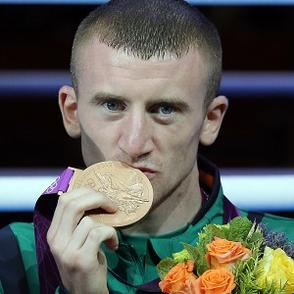
The eminent journalist and provocateur Eamonn Mallie has caused a small fuss in the last few days by condemning Northern Ireland's Olympic celebrations. Despite the fact that London 2012 saw the greatest ever success for Northern Irish sportsmen, he has argued in his blog that the province's celebration of their achievements was shamefully divided, with the Belfast boxers Paddy Barnes and Michael Conlan, who won bronze medals boxing for Ireland, being festooned in green, white and gold in Belfast, while the celebrations of the three Coleraine rowers, Alan Campbell and the Chambers brothers were to be decked out  in red, white and blue during their own hometown celebration.
You can listen to his despair on his website here:  http://eamonnmallie.com/2012/08/bigots-in-victory-too-how-pathetic-are/
This morning I was asked to contribute to the Stephen Nolan Show on Radio Ulster this morning, as a counterpoint to Eamonn. As I didn't really disagree with what he was saying I'm not sure I was a particularly enlightening contributor, but I thought it might be worth looking at his points in a little more detail here (it was a very brief discussion).
Eamonn argued that the achievements of the Olympians has been undermined by the sometimes begrudging reception they received, pointing out that the Dublin media had mostly ignored the achievements of the three rowers who were representing Team GB. He also wanted to know why there wasn't a joint celebration of all of Northern Ireland's Olympians, a celebration that didn't divide by flag.


My own brief contribution to the debate amounted to saying that that was indeed a good idea but to also say why shouldn't the boxers be celebrated in Belfast and the rowers in Coleraine? Why shouldn't they be acclaimed in their own communities? Isn't the challenge for Northern Ireland to get to the stage where we don't see one community's celebration as in some way diminishing for the other?
There is some talk of Stormont organising a large celebration of the province's Olympians following the completion of the Paralympics, which hopefully will address Eamonn's main contention - that each community is only celebrating its own and not embracing those from the other side. I hope that does indeed take place. In some senses it strikes me that this debate goes to the very heart of what I wanted to talk about in Whose Side Are You On? The idea that sport is and always has existed in a political framework, and as a result has been tugged and twisted to fit political agendas. That twisting and buckling is the story of Northern Irish sport over the last half century (and more).
But that's not the only story sport tells. It also reveals that sometimes we can find ourselves finding common cause with "the other side" through sporting heroes - from George Best to Dennis Taylor, Barry McGuigan to Alan Campbell and Paddy Barnes. It also tells us that sport can be used as a vehicle for attempting to heal divisions, whether it be in the work of grass roots organisations such as Peace Players International or in the way  local Irish League football clubs have forged associations with GAA clubs.
One of the points Eamonn made this morning was about symbolism. He reminded Radio Ulster listeners that the DUP First Minister Peter Robinson has gone to a GAA match and the Deputy First Minister Martin McGuinness has turned up at Windsor Park. These are symbols of politicians embracing the sporting environments of the other community. Sport allows for these gestures of reconciliation because it has so often been a point of division. It can be a vehicle for both.
There's another story that sport tells too, one that sometimes gets overlooked in Northern Ireland because we are so keyed to symbolism. That's the story sport tells about sport. The reasons why an Olympic celebration should matter in the first place is because of the efforts of five Olympians from the province. They may well have wanted to win a medal for the country they were representing but it's not difficult to imagine that in the first place they wanted to win a medal for themselves as a recognition of their own effort. Sportsmen and women are sportsmen and women because they love sport. Some may have political opinions, some may not. But those come second to the desire to compete. Sport is about competition first and foremost. The flags are an afterthought.

Sunday, 5 August 2012

George Best Bites His Nails

Last Monday night I went along to an open air cinema in Brunswick Street in Glasgow to watch a film I've wanted to see for years - Football Like Never Before, a 1971 German film about George Best in which the film-maker Hellmuth Costard used eight 16mm cameras to film Best during a game against Coventry City in 1970 - the same trick Glasgow artist Douglas Gordon would do with Zinedine Zidane more than 30 years later.


It's an interesting trick but one that does demand some endurance. Costard's film offered some aesthetic pleasures - the slab red of Best's top and socks popping on the screen against the green of the pitch, the raven blackness of his long hair and the way it matched his boots which, as the man behind me said, looked like winklepickers - but by the end of the game I wasn't really surprised that there was only myself and the organisers left (along with maybe a couple of people who had retreated to the outdoor seats at the Brunswick bar).
The film was rather at the whim of circumstances and the game Costard chose to shoot turned out to be a rather dreary one, especially in the first half. But for those of us who never got to see Best play live it offers a unique opportunity.
There's a good summary of the film here for those who want more details, but my own impressions were fragmentary. I was taken by how little the warm-up amounted to - basically George attempting a flick-kick if the ball came near him  - by the lack of football tops in the crowd (the early seventies, another world) and by the game's puritanism (Bobby Charlton gets a handshake when he scores and that's it. Best gets an arm in the mouth and he gets up, makes sure he's not bleeding and gets on with it).
But when I got tired of looking at the crowd or trying to identify who was playing for Coventry (I noticed WIlly Carr and Ernie Hunt which immediately made me think of trying to recreate their famous goal after seeing it on Match of the Day) I was left watching George and what struck me was how lonely he looked.


I'm trying not to project here. I'm trying not to read his future into this. But it is striking for how much of the game he is in the frame alone. He ambles about, making cursory tackles here and there, passing the ball when it comes to him, starting a run, getting tackled, falling over then waiting for the ball to come near him again.
Part of this isolation is down to the fact that he is on the periphery of the game for long stetches of course. In the second half he scores and sets up the Charlton goal and now and again you get a sense of what he was capable of as he accelerates from a standing start in huge lung-bursting surges past the pale blue Coventry shirts. Then again, the only time he seems to talk to any of his team mates is just before the second half kick-off and when he's not involved in the game he is biting his nails.
It all ties in with a remarkable sequence at half time when the camera cuts away from the game and we find ourselves in the back corridors of Old Trafford. This is clearly a different day because Best is now heavily stubbled, whereas he's clean shaven during the game. He walks in front of the camera and then turns and for a few minutes he is looking at us (or so it seems) as we look at him. He says nothing. The cameraman says nothing. It's a sequence that feels revelatory. Here is Best the man before us, exposed. Does he look uncomfortable? Does he look wounded?
Sorry, I'm projecting again. But I suppose that's what the film leaves you with. A fleeting sense of the man behind the myth. Yes, he was talented and yes, he was good-looking (there's no question that at times the film has almost homoerotic overtones as the camera repeatedly focuses on Best's thighs, his backside, the nape of his neck), but he was also human. He made the wrong decisions in games. He chose the wrong path. He got knocked down. But he got up again.
 It's the getting up again that makes you a sportsman, I guess.

Saturday, 4 August 2012

We shiver in the rain by the touchline ...


Coleraine Academical Institutution finished me as a sportsman. When I arrived in 1975 my previous high standing as captain of the Killowen Primary School football team counted for nothing. Mostly that's because Inst didn't play football. It was a grammar school. Rugby, cricket and rowing were its sports. And I was too weedy for rugby and rowing. I'd also had an unfortunate encounter with a real cricket ball a year or two earlier which has left me suspicious of the sport ever since.
In first year I stood on the touchline in a mustard yellow top hoping the rugby ball would come nowhere near me before eventually opting out of sport for the weekly run which over the years slowed to a leisurely stroll, dreams of a sporting future shrivelling with every step. By then I was more interested in comic books and movies anyway.
Clearly whatever resentment I might once have felt towards the school's anti-football tendency (and believe me, there were times when it made me livid. I mean, Killowen had won, oh I'd say, maybe two games under my captaincy) has faded because this week I was glued to the TV to watch the two Coleraine Inst "old boys" compete in the rowing at Eton Dorney. To see the emotion and sheer agony on Alan Campbell's face after the single sculls yesterday was to be reminded of the agony and ecstasy of sport. Sitting in a wheelchair trying to respond to John Inverdale's questions he looked in such pain it felt like a cruelty to watch him.
And yet today he can feel warmed by his achievement. And in the space of a couple of days my home town  can suddenly boast three Olympic medal winners and Coleraine's name has been appearing in national newspaper headlines, following the silver for the Chambers brothers, Richard (who also went to Inst) and Peter  in the lightweight four. All three once belonged to the Bann Rowing Club.
 Campbell and the Chambers Brothers will undoubtedly  receive some kind of civic reception in the near future. If it takes place in the Coleraine town hall they may pass by the statue of another sporting hero of the town, Bertie Peacock which has pride of place in the Diamond. Sport is a way of writing places into the popular consciousness. There are much worse ways. As Northern Ireland knows all too well.

Friday, 27 July 2012

Olympic Cycles

There are three Olympic stories told in Whose Side Are You On? The first is the most famous - the story of Mary Peters who left a bleak, bomb-blasted Belfast in 1972 to travel to Munich to compete in the Pentathlon. After two days of competition she returned to Northern Ireland with a gold medal hanging around her neck (and a death threat hanging over her head). Hers is the great Northern Irish Olympic story. The story of an athlete who pushed herself and pushed herself and got her rewards. I always think her success is underrated in the British Olympic story, given the paucity of facilities she had to train on in Belfast at the time and the violence that marked the city at that time (no mention, for example, in this morning's Radio Four Olympic montage).


Then there's Wayne McCullough's story. McCullough is one of Northern Ireland's best ever boxers, born and raised in the heart of Protestant Shankill.who represented Ireland - because boxing is organised on an all-island basis in Ireland - in the Seoul Olympics in 1988 at the age of 17. He was asked to carry the Irish flag at the opening ceremony and maybe was too young to realise how that would be perceived back in parts of Belfast.
The third story is the least well known, I guess. But I thought it's worth retelling here because it's a little cameo of the way sports stories are constantly at the mercy of politics. It concerns a cyclist called Noel Teggart, a lorry driver from Banbridge. Teggart was 31. He was representing Ireland, cycling, like boxing, being one of those sports organised on an all-island basis. Unfortunately there were other Irishmen in Munich  who were keen to make a protest. Members of the National Cycling Association, an organisation banned by the sport, wanted to make a protest against the "British occupation of Northern Ireland". To do so they hid in a ditch all night with the aim of then jumping up and interrupting the race.
Unfortunately, they didn't realise the race had been delayed for 24 hours. Still, they were back in the ditch 24 hours later and when it finally got underway they emerged from hiding, grabbed Teggart's bike and refused to let him move for a couple of minutes, by which time whatever chances he had in the race were long gone.
The story of cycling in Ireland after partition is a litany of organisations being banned and new organisations being formed usually along religious and political lines. Teggart was unfortunate in that his story was subsumed into this larger one.
And to little purpose in the end. Although the NCA's protest - although widely reported in Ireland, north and south - was largely ignored by the rest of the world. That's because the Palestinian Black September group had by then mounted their own protest by seizing Israeli athletes in the Olympic village. The siege ended in a gun battle that killed nine of the athletes. It remains the greatest disaster in Olympic history and the greatest stain on the Olympic ideal. The 40th anniversary of that tragedy is just around the corner. 

Saturday, 21 July 2012

Sporting Snobbery ... A Confession

Is it me or has the Tour de France been a bit dull this year? No? So definitely just me then? Honestly, I can't say I've been able to get too excited about the prospect of the first ever British winner of the greatest race in sport. Good on Bradley Wiggins and all that, but his success has not really raised my heart rate.
Two reasons. One is that the race itself this year has been quite unexceptional. Team Sky has bossed it and as a result Wiggins has never really been truly tested. Maybe that's because there's no one good enough to test him (except his team mate Chris Froome).
Yes, I know that controlling the race is itself a huge sign of sporting prowess but it's not what I want from the Tour. My most cherished cycling memories have always been those moments - usually in the mountains; I've never been that bothered about the sprint finishes - where a rider is on his own against his closest rivals and has to put up or shut up. And so, as I've mentioned before, my favourite Tour moment of all is Stephen Roche's astonishing recovery on La Plagne in the 1987 tour when he hauled himself back to within spitting distance of Pedro Delgado after the Spaniard had attacked and opened up a 90-second lead. That and the time the (dope-assisted) Bjarne Riis rode away from all his rivals (including Miguel Indurain) on Hautacam in the 1996 tour in a contemptuous display of acceleration, not once, not twice, but three times.


If I'm honest, though, this isn't just about sporting taste. There's something else going on here too that I think I have to own up to. The reason I kind of don't really want Bradley Wiggins to win is that, well, he's not exotic enough for me. He's called Bradley and he's British and he doesn't fit in with my own sports snobbery. 
Back in the 1980s when Channel 4 first started screening highlights of the Tour part of the appeal for me was that it was not mainstream. I was living in Scotland but only my bike-loving mates Gerry and Davy knew who Robert Millar was at the time. Following the Tour was a mark of difference for us.
And marks of difference mattered then. Pop culture in the eighties was very bipolar. You either bought into the Tina Turner/Phil Collins mainstream or you bought the NME, listened to the Smiths and kidded yourself on you were cooler than everyone else. Coolness was a political statement. It meant you'd probably heard of  (if not actually heard) Test Department, seen the odd Wim Wenders movie and didn't vote for the Tories. Almost inevitably that outlook extended into your sporting tastes. And so Alex Higgins was cool, Steve Davis wasn't. Eric Bristow was cool, John Lowe wasn't.
You (okay, I) formed perceptions of sportsmen and women and put them in one camp or another. Davis was uncool because he was linked to Barry Hearn, was a very effective snooker player and turned up once at a Tory party conference. Alex Higgins was Alex Higgins.
In more recent years I've rather warmed to Davis, while the more I learned about Higgins's messy life the less I liked him. I still think he was the more thrilling - if not necessarily better - snooker player though.
You would think I'd have grown out of this by now, but if I'm honest I still carry a fair freight of sporting snobbery around with me. And so it doesn't seem right to me that a British team called Team Sky should dominate the Tour. It's too ordinary. I want it to be some exotically-named Spaniard or Italian. Or Colombian. (Whatever did happen to Luis Herrera?)
 Nor do I want English teams to win the Champions League (unless, of course, it happened to be Spurs, but I don't think there's any danger of that happening soon). And I rather enjoy it when England or Scotland are outplayed by a technically superior European or South American side because it plays into my vision of the rest of the world being cooler than us (though if it's Northern Ireland playing allegiance trumps snobbery).
I can't be alone in this, can I? There must be many of you out there who rave about the superiority of Serie A over the Premier League, or talk knowingly of the superiority of Cuban boxing in comparison to the rest of the world. (Examples welcome.)
The real triumph of cycling in recent years, of course, has been the huge explosion in its popularity in Britain. Thanks to the efforts of Chris Hoy, Mark Cavendish and Bradley Wiggins the sport is moving into the mainstream. It's getting extensive coverage in the press (rather than just a column buried somewhere deep in the sports pages) and you can buy creamy, luxurious magazines like Rouleur dedicated to the sport.
In some sense I'm thrilled by this - there's a sense of vindication inherent in the fact that everyone is cottoning on to something I've always known about -  but the snob in me is still slightly put out. Where were you all in 1984, eh? Now excuse me, I've got some Rough Trade B-sides to catalogue.

Tuesday, 3 July 2012

Green Days


Now that Spain are champions of the world and champions of Europe (again),  it's worth remembering that it wasn't always so. Here's a slightly longer version of the piece I wrote for the Sunday Herald to celebrate the 30th anniversary of Northern Ireland's victory over Spain in Valencia in the 1982 World Cup:


"Gerry Armstrong ... What a worker he is ..." For most of us, I’d imagine, there are a handful of sporting moments that we hold closer than most, moments where the thrill of what we’ve seen has seared itself into our memory never to be dislodged. " ... Striding away there with Hamilton to his right ..." Ask me and I’ll happily reel my own off: Ricky Villa’s goal in the 1981 FA cup final replay, the Chris Eubanks-Nigel Benn fights of the early 1990s, Stephen Roche coming round the corner on La Plagne still close enough to the wheelrims of Pedro Delgado to ensure he’d win the 1987 Tour de France, Usain Bolt seeming to slow down to look around as he won gold at Beijing four years ago (running the fastest time ever as an added bonus). "Still Billy Hamilton, he’s gone past Tendilio ... " But my absolute favourite came 30 years ago, on a hot night in Valencia, soundtracked by John Motson’s commentary. " ... Arconada ... Armstrong!"
Thirty years. Half a lifetime. I can still see the living room of my parents’ house in Coleraine where I sat that night; the sofa, the fireplace, which in winter still held a real fire back then, and the TV in the corner, small by today’s standards, the colour images fizzing and strobing from the satellite feed. I was just a couple of weeks from my 19th birthday, a couple of months from leaving Northern Ireland to start life as a student in Scotland and start untying myself from the place I came from.
At the time it couldn’t come soon enough. The Troubles had started when I was six years old and were showing no signs of stopping. The early eighties were a particularly grim time. We were only a year on from the hunger strikes. A month on from this night the IRA will detonate bombs in Hyde Park and Regents Park in London, killing 11 British soldiers. Back then I wasn’t sure I wanted to be Northern Irish any more.
But I still wanted Northern Ireland - a ragged bunch of motley journeymen with only one recognised world class player (Pat Jennings) - to win that night. They were still my team. I still sat forward in my chair as Gerry Armstrong picked up the ball in his own half and surged forward. He was the only white-shirted player on the screen until Billy Hamilton moved up on the right wing. Hamilton played for Burnley, had a wee spidey moustache on his upper lip and would never be as famous again as he was on this night. Armstrong knocked the ball wide to him and moved towards the Spanish box. Hamilton almost casually shrugged off a challenge from the Spanish defender Miguel Tendilio and pushed the ball into the Spanish penalty box. But right at the Spanish keeper Luis Arconada unfortunately. The keeper just had to drop on it and that would be the end of the attack. But for some reason Arconada elects to punch instead. Straight to Armstrong who fires it into the back of the net. 1-0 to Northern Ireland. For a moment the world - or my world at any rate - stopped.
On my TV screen Armstrong is embraced by a limping Sammy McIlroy and given a bear hug by Whiteside (who at 17 and a matter of days is the youngest player to play in the World Cup finals to this point) and as he does so I swear I hear the whole street I live in erupt; a ragged, raucous cheer echoing from house to house. This is the sporting moment I love most, the moment I remember feeling most simply, happily, giddily Northern Irish too. For the next 40 minutes Spain batter at the Northern Ireland back line but can’t find a way through. Northern Ireland have beaten the hosts, topped their group and gone through to the next round of the World Cup. It is a glorious night.
A few hours later at around two in the morning my father is on patrol with the Ulster Defence Regiment between Magherafelt and Garvagh when a 500lb landmine is detonated under his landrover. He came limping home the next morning (limping worse than Sammy McIlroy) and told me in the vaguest possible terms what had happened.
What’s curious to me now is how far apart my head had separated these two memories. It was only a couple of years ago, prompted by reading a private history of his regiment, that I realised they had happened within hours of each other. It’s as if I had deliberately rubbed out the linkage, as if not wanting to sully the good memory with the bad.
June 1982 is the high point of my life as a Northern Irish sports fan. Other days and nights - arguably greater days and nights - followed: watching Dennis Taylor, Barry McGuigan, right up to Rory McIlroy winning the US Open. But they’re not football.
I guess 1982 has other resonances too. It was - or I like to think so - represents a utopian moment, a moment when Catholics and Protestants played together in the same team and no one thought anything of it. Just over ten years later Northern Ireland would play the Republic of Ireland in Windsor Park on a night full of sectarian chanting. Just over 20 years later Neil Lennon would receive a death threat and never play for his country again. And even today players like Sunderland James McClean who come from nationalist backgrounds say they don’t feel comfortable playing for Northern Ireland, despite major efforts by fans and the Irish Football Association to address the problem. Back in 1982, Gerry Armstrong, a player who grew up in nationalist west Belfast was a hero of the fans. He never received any sectarian barracking because of his religion.
I can’t believe anyone today would still claim that sport and politics don’t mix. The problem in Northern Ireland has been that for the last 40 years sport and politics have too often mixed in the same way as guncotton and nitroglycerin. June 25, 1982 is one of those moments, though, when that didn’t apply. That’s why it still seems something to savour.
A few years ago I went to a race meeting at Down Royal. On the way I passed the site of the former Maze prison. It was a clear summer’s day. There were people dressed in their Sunday best, punters in denim (many with Billy Hamilton taches) and bookies all of whom were from south of the border. The punters got drunk, the well-dressed had their pictures taken, the bookies got rich. I remember standing in the grandstand, tearing up another losing betting slip and looking out across the course to the fields beyond. Those tight little fields that surrounded me in my younger years. All those different shades of green. And I thought of all they might represent. The green of the land, the green of football shirts, the green of UDR landrovers. People were cheering and - I’m pretty certain about this memory - I thought about Gerry Armstrong.

Monday, 25 June 2012

England's dreaming ... but why not the rest of us?


Here we are the day after the night before and I'm listening to Gary Lineker on Radio Five Live lamenting another English failure. So it goes. So it always goes. 
I spent this afternoon watching the film One Night in Turin, the documentary about the 1990 World Cup  and it's amazing how familiar some of the echoes between then and now are - most notably in the discussions about England's preference for 4-4-2.
Otherwise, though, everything - football hooliganism, a government in 1990 that was explicitly anti-football, the last time West Germany played in an international competition - has changed. What hasn't changed is that sport and politics go hand and hand.
One Night in Turin is good fun, by the way. It has the advantage of the operatic nature of that World Cup. Not the best in terms of the football but full of great stories. 
You do watch it thinking how did England ever get to that semi-final, of course. Cameroon should have humped them in the quarter final. But then, as I've mentioned before, England were so good in that semi-final, so deserving of going through, you can't help but feel for them at the end of the film. There's some lovely footage of the late Bobby Robson consoling Paul Gascoigne just before the penalty shoot-out, Gazza knowing he won't be playing in the final if England do go through because he'd picked up a second booking. And rather moving footage of Chris Waddle too as he steps up to take a penalty and misses. The camera stays with him, watching as he drifts from disbelief to despair. The fact that West Germany's Lothar Mattheus goes to console him before joining his victorious team-mates speaks well of the German captain.  
It's interesting, though, watching it today particularly. In Scotland this morning the anti-independence campaign was launched probably thankful that England went out last night. This may seem a shallow point but the fact is there is no question that when England play in the World Cup and the Euros the TV coverage is so pro-English that it has an inevitable distancing effect for those of us who are not English. Last night I spent the match moaning that the Republic of Ireland should take back all those caps it gave Mark Lawrenson so boss-eyed was his commentary.
I doubt that's going to change how anyone will vote in a referendum of  course. But it's part of the mood music. And while it's totally understandable that the majority of viewers/listeners/football fans in the UK are English and it's no surprise that the coverage reflects that, it still sometimes feels that the rest of us are stuck on the outside looking through a glass wall. And no one seems to be looking back at us. There is no Scottish or Irish or Welsh equivalent of One Night in Turin. Yes, you might say, that's because none of them have ever reached the semi-final of a World Cup.  I can't argue with that.


But today is the 30th anniversary of Northern Ireland's win over Spain in the 1982 World Cup. If you want to know why that matters to me you can read a piece I wrote in yesterday's Sunday Herald (I'll post it here soon).
It's not an anniversary that has received much coverage elsewhere. Why should it, you might ask again? It was only a group game. That's true. But clearly Northern Ireland is never going to win the World Cup or the Euros. It's conceivable that we might never qualify for the finals again in my lifetime. So it seems like a worthwhile story, especially given the politics in Northern Ireland at the time, just a year after the Hunger Strikes.
The fact is that the football stories we get told for the most part are English stories. Not in books, but on TV and radio and in the newspapers, that tends to be the case.
I wish that wasn't so. I would love to see a documentary about Northern Ireland in Spain in 1982. But then I'd also love to see a documentary that traced German football from the war, or Spanish football. The beautiful game is full of amazing stories. Tell us them all.
I'm happy seeing English stories too, by the way. The fact is England's footballing history over the last 40 years is, in a way, also my history. There's another anniversary coming up tomorrow. It will be 16 years since England were knocked out of Euro '96 by the Germans. On penalties. Four minutes after the last penalty that night my daughter was born.


Friday, 22 June 2012

One night in Valencia

A couple of heads-ups for you. It is almost 30 years since Northern Ireland's glorious victory over Spain in the 1982 World Cup. If you remember watching it - and yes I do - you're probably not a young thing any more. I've written a piece celebrating Gerry Armstrong's winning goal in this year's Sunday Herald. Will link to it asap.


Also just announced yesterday is the Edinburgh Book Festival programme. And I'm appearing alongside the estimable Rodge Glass, author of Bring Me The Head of Ryan Giggs, which is a top novel by the way. The theme for our event is "When Sporting Dreams Go Sour". Plenty of scope there, I would have thought.
Feel free to come along on Monday, August 20 and snigger when I have to read out loud (Rodge is very good at it so that will make me look all the worse). The details are here: http://www.edbookfest.co.uk/the-festival/whats-on/rodge-glass-teddy-jamieson

Wednesday, 6 June 2012

Euro 2012: Why I'm Not Supporting Ireland either


I was listening to Radio Five Live last night as Packie Bonner, John Aldridge and David O'Leary were reminiscing about playing for Ireland in the Euro 88 and the World Cup in Italy in 1990 and what was most striking was how familiar it sounded.
Change the year and move the accents slightly north (Aldridge accepted of course) and it could have been Gerry Armstrong, Sammy McIlroy and Norman Whiteside talking about Spain in 1982 (another anniversary fast approaching).
I remember watching Jack Charlton's team with a slightly detached enjoyment at the time. It was a great story in 88, especially when they beat England in the opening game - a classic case of the thrill that greets the triumph of the underdog. My dad, whose background and inclination were solidly unionist even cheered that one,  though his politics would have suggested otherwise. Sometimes, sport can be just sport I guess.
So here's the thing. I support Ireland on the rugby pitch but not on the football pitch (not unless they're playing for the Northern version). Why is that?
 I hope it is very simple. The Republic is another country in footballing terms - which are the terms I'm interested in -  and so many of the same reasons I suggested for not supporting England yesterday are relevant here too. Well, apart from the media coverage perhaps.
 Not everyone would adhere to such airy dismissals of course. The history of Northern Ireland's meetings with the Republic of Ireland has often had more than a bit of poison swirling around it, most notoriously in 1993 when Charlton's team travelled north to play at Windsor Park hoping to ensure their place in the World Cup in America. The venom in the ground that night directed towards the Republic's players would inspire Marie Jones's play A Night in November. It's a game I cover at length in Whose Side Are You On? On that night, as on many others, football was politics by another means. For some in the crowd at any rate.


And an ongoing tension between north and south continues up to the present day. The fact that there are players born and raised in the north playing for the south is a bugbear for some. There's been some heated words said in the last couple of months about Sunderland player James McLean's comments suggesting that Catholic players were not welcome in the Northern Ireland set-up. Former Northern Ireland winger Keith Gillespie had a go at him this week and even argued that McLean had used Northern Ireland when playing at Under 21 level: "He had no intention of every playing for the Northern Ireland senior team and he's made that clear but he used the Northern Ireland system to get into a position where he could defect to the Republic."
Others, anonymously, said much worse and even sent McLean death threats, which no one deserves.
McLean's comments do point out the challenge that still faces the Irish Football Association in Belfast despite the huge strides that have been made via the Football For All campaign. We have to recognise that some players from nationalist backgrounds will always prefer to play for the Republic. And after that make the Northern Ireland set-up as welcoming for everyone else. Some would argue - Gillespie among them, I guess - that's already been done.
Football has always been one of the principal sporting theatres for sectarianism in Ireland, north and south. That's a given. But it should be said that it's also a theatre for challenging it too. Gerry Armstrong and Pat Jennings are heroes to most Northern Ireland fans. It doesn't matter their background.
But back to not supporting Ireland. Here's the thing. I hope they do well. I hope they're not too boring and I hope that Robbie Keane bows out in scintillating form (always loved Robbie). But I'm not going to be cheering them on. I want Euro 2012 to be a brilliant footballing spectacle where the best players in the world play to the best of their ability and dazzle us with their skills. I kind of hope Spain win but really in the end I want the best team to win and not someone boring us to death with 1-0 wins.
If Northern Ireland had made it I would qualify that wish. But as they didn't, I can smugly say that's exactly why I won't be supporting Ireland (or England for that matter). In the end it is about the football.
Then again, say both England and Ireland come through their groups and meet in the quarter finals. Who will I be cheering on then?


Tuesday, 5 June 2012

Euro 2012: Why I Won't Be Supporting England


A couple of years ago I was asked by the Sunday Herald in Glasgow to write a piece to run ahead of the World Cup explaining why I wouldn't be supporting England in South Africa. A little context. At the time England travelled with some expectation and I imagine while I was writing it the hot air of the media at the time would have been overheating me in the run-up to the tournament. I was also writing for a Scottish audience who were being encouraged to overturn their habit of saying "A-B-E" - "anyone but England". Which seemed to be ridiculous to me at the time. I tried to explain why in the following piece:


My name is Teddy Jamieson and I’m not supporting England during this World Cup. Does that make me a bad person? Actually, some people seem to think it does. Of late a lot of people seem to have been telling me I should get over myself and start supporting Fabio’s boys; newspaper columnists, Scottish footballing types (including the manager of the national side), even the Prime Minister have all implied as much.
Well I have listened to what’s been said, weighed up the advice and come to the conclusion that the argument being advanced is, in technical terms, mince.  I’m not raising a Red Cross above the house. I’m not praying that Gareth Barry’s fit. I’m more likely to be hoping that Wayne Rooney loses his temper and tells some luckless referee to stick his whistle up his vuvuzela.
There’s a very simple reason for this of course. I’m not English. This seem to confuse people, yet last I looked the United Kingdom consists of four countries, not one. And just because the other three countries weren’t - let’s not beat about the bush - good enough to participate in the South African extravaganza doesn’t necessarily mean I should then automatically cheer on the next-door neighbour. It’s a bit like living in the same street as someone who’s having a month-long party and you’re not invited (probably because you’re rubbish at dancing and they know you’ll drink all the booze). It’s understandable that, as much as you get along with them most of the time, you might get a bit irked as the noise rises.
What bugs me about the arguments being advanced at the moment is how they manage to both take football too seriously and not seriously enough at the same time. Too seriously in the sense that they conflate not supporting England with anti-Englishness. Which is spurious rot. It does not automatically make me some raving nationalist bigot who can tell you the names of every Scottish braveheart who died at Bannockburn. (That’s maybe because I’m not Scottish either. My national team of choice is Northern Ireland and I quite enjoy it when Scotland get humped too.)
Of course there are bigots out there. But they’re not the norm. The truth is, it’s not racism that fuels an antipathy to the England football team. It’s the thing that fuels football supporters everywhere -  sporting tribalism. This is what's not taken seriously enough. Would David Cameron stand up in parliament and suggest Celtic fans should back Rangers in any future Europa League final? Would he expect Liverpool fans to cheer on Man United in the Champions  League? No. So why is it that at international level such rivalries are suddenly meant to be put aside? As a Spurs and Stirling Albion fan I take almost as much delight in the failures of the Gooners and Alloa Athletic as the successes of the former. Sometimes, schadenfreude is the only pleasure we have.
And anyway,  even from an aesthetic viewpoint there’s no reason to support England. Are they likely to play the best football in the competition? I doubt it. That’s more likely to be Spain or Holland. Will they offer the best story? No, that will come from Argentina, where Diego Maradona will either undermine the most gifted players in the tournament, or, less likely, admittedly, guide them to a stunning triumph.
And how many times in living memory could you say England have ever actually played glorious football in the final stages of international competitions? Maybe in 1996. Mostly, though, they’re dour and relatively efficient. Until they meet someone better than they are. And there's always someone better than they are. The truth of it is, the England team are just Germans who are rubbish at penalties."


Revisiting the piece two years on, I'm rather pleased that I predicted the finalists (kind of). Oh and England lived down to my expectations. They had a poor tournament, played badly throughout and in the end were well beaten by Germany. 
It's interesting in 2012 that I don't feel quite as animated as I appear to be in that piece (which, incidentally was spiked for lack of space), which is probably a reflection of the much reduced level of expectation surrounding England this time. Too many injuries, Wayne Rooney out for two games and a sense that this is a team that's in transition.Even Time Magazine has noticed.
But I still don't want England to do well. Just because I don't really want to have to listen to the (understandable) triumphalism that would ensue.
What I didn't have room to address in that piece was the fact that, of course, I love English football. My whole frame of footballing reference arises out of 40 years of watching Match Of The Day. I love Spurs. Growing up, my favourite players were all Spurs players, often English players. I loved no one more than Glenn Hoddle and if you ask me now my favourite British player I'd say Hoddle before I'd say George Best. Or even Pat Jennings.
More than that I love England. London is my favourite city in the world. I love spending time in Liverpool, Manchester and Newcastle. But in the end my national team is Northern Ireland, not  England and when the BBC becomes the EBC as it invariably does during such football tournaments I feel inevitably other, not part of the collective that's been reflected back at me.
But even so there are complications now and again. Back in 1990 I cursed and swore at England all the way through the tournament. To me they should have been knocked out by Belgium in the last 16, knocked out by Cameroon in the Quarter Finals and then they played West Germany in the semi-final. Since I was born in West Germany I've always had a soft spot for the German team (even wanting them rather than Holland to win in the 1974 World Cup final).
But as that game went on in the sheer theatre of the game I found myself willing England to win it. They were the better team. They deserved to get to the final. I wanted Chrissy Waddle to play in a World Cup final. They didn't get there of course. As already mentioned, rubbish at penalties. And of course I would have reverted to anyone but England if they had got to the final. 
But it didn't happen and it feels less likely this time. Perhaps I'll be surprised. Maybe England this time around will thrill me. Then again, it is England. The tragedy of English football? Its predictability.

Next: Why I'm not supporting the Republic of Ireland


Monday, 28 May 2012

Best gear


Flicking through a new book on the fashion designer Paul Smith [Paul Smith A To Z, Abrams, £18.99] I noticed that along with his predictable love of cyclists one of Smith's sporting heroes was George Best. "I met this amazing footballer from Northern Ireland. He is immediately recognisable by his sideburns and his taste for champagne," he writes.
Best's life is capable of being interpreted in so many different ways but it's possibly not so common now to talk about him as a fashion icon, partly because his look - or the look that we remember him for - was very seventies and for all the Sandbrook-inspired retrospectives going round at the moment the seventies lad isn't a style that's particularly popular (although I have noticed the odd big sideburn in the last couple of years).
And yet starting with Best the way footballers appeared became part of their appeal. As a result, one of the reasons he was so loved was because of his look, and, of course, how that look meshed with his lifestyle and playing style. As Paolo Hewitt said in an interview about his book Fashion and Football a few years ago:  "George Best was an amazing player because he was like that off the field. When he got the ball he wanted to entertain and to play and that carried over into all aspects of his life, his drinking, his womanizing and his clothes."


We were (and perhaps still are) enthralled by the completeness of Best's lifestyle. The fact that he played on and off the field in the same manner. Clearly by the time his problem with alcohol became known it wasn't/isn't so attractive. But he was - as Paul Smith and Paolo Hewitt could attest - a fashion icon for a while.
In the 1960s Best even owned his own clothes store, Best Boutique, in Manchester (he opened it with Man City's Mike Summerbee. You can see it in the opening sequence of the movie version of Jack Rosenthal's The Lovers.
I'd love to know if anyone from Belfast (or their dads or Grandads) made the journey to shop there.

The Fashion of Football by Paolo Hewitt and Mark Baxter is currently available on Kindle

Thursday, 17 May 2012

Joey Boy


What with a Champions League final, the arrival of the Olympic Torch, the countdown to Euro 2012 and even an all-Edinburgh Scottish Cup final going on, it's possible that many will overlook the fact that this is a huge weekend for Northern Irish sport.
Of course the Heineken Cup final will be noticed, especially if Ulster manage to upset the odds on Saturday (here's hoping). But the other huge Irish sporting event of the weekend, the North West 200, may not get quite the same coverage. And yet the motorbike road race will attract tens of thousands of people to Northern Ireland's north coast attracted to the speed, roar and rush of the race.
That roar is a soundtrack of my childhood.Growing up in Coleraine as I did, the race was an annual event in the town. But if I'm honest it was never something I looked forward to particularly. There's a family story that as a kid I went to see it and then came down with Mumps the next day. But I doubt that association really explains my disinterest. It's more, I suspect, that motor sports are one of my blind spots. I'm even more indifferent to Formula One.
Even so, I was always aware of the North West 200. It would have been impossible not to be, given how large it figured in local culture. And of course that wasn't just because of the race itself. There was also the fact that one of the greatest motorbike racers lived just down the road.
In Northern Ireland Joey Dunlop is one of the most important sporting figures of the last 40 years. And yet his name is little known outside the province and motorbike circles.
Perhaps that just makes their affection for him all the stronger. A five-times world champion, Dunlop could ride a bit. That was a part of his appeal. But I always thought the fact that he was so Northern Irish helped too:  Northern Irish in his thrawnness, his unwillingness to put on airs and graces and his sometimes comically monosyllabic interviews. And when he did speak the broadness of his Ballymoney accent only cemented his down-home image.
Dunlop is, it's worth adding, the reason I wrote Whose Side Are You On? in the first place. The book began when I read an obituary of Joey's brother Robert during a practice session of the North West 200 in 2008. Robert's death came eight years after his brother's. Joey died when he came off his bike during a race in Tallinn in Estonia in 2000. In Robert's obituary it mentioned that when Joey died his body was brought back to Dublin and then the funeral cortege headed north to Ballymoney.
The journey, though, coincided with a spasm of violence in the north. It was marching season and the refusal to allow Orangemen to march down the Garvaghy Road in Portadown had led to widespread road blocks and confrontations between loyalists and the security forces. As a result the cortege struggled to get to Ballymoney and Robert had to make a public plea to allow his brother's body to be brought home.
Reading that obit in 2008 I suddenly thought that here was an example of how the Troubles had impacted on a Northern Irish sporting story. How many more had that happened to? Very, very many, it turned out four years and more than 300 pages later.
Ironically, though, Dunlop's story is actually one that for the most part was not touched by the Troubles. He was an apolitical figure and motor bike racing was not associated with one side or the other. It was allowed for the most part to just be a sport. The North West 200 itself was only cancelled once because of security fears prompted by the Troubles. Numerically foot-and-mouth had as much of an impact.
 For that reason alone, I'd argue, the race should be celebrated. I hope the weather's kind to those who are going to Coleraine, Portstewart or Portrush this weekend. And have an ice cream in Morelli's for me.