Saturday, 20 October 2012

Football, racism, Hillsborough


Not strictly relevant to proceedings here, but this week in my day job I took a break from writing about books and pop and art and photography and architecture to write about football. Thought you might be interested:


You do wonder if John Terry winced just a little when he heard the Prime Minister's reactions to events in Serbia on Tuesday.
After a post-match brawl and accusations by the England Under 21 players and officials that the team's black players were subject to racist abuse, David Cameron said it was time for UEFA to take tough sanctions: "If we are going to stamp out racism from football, then it is no good giving derisory fines, as have been handed out in the past."
Could he have been talking about Terry? Only last month the Chelsea and one-time England captain was given a four-week ban and fined £220,000 (just over a week's wages) when he was found guilty of racist abuse against QPR defender Anton Ferdinand by the FA. Curious definition of tough, that.
Read one way the recent upsurge of racism marring the beautiful game could be seen as something of a step backwards. After all when Ron Atkinson made a racist comment about the then-Chelsea player Marcel Desailly back in 2004, he was forced to resign from his job as an ITV commentator and it effectively ended his career in the game. Today, Terry is still Chelsea captain and the club's fans still chant his name.
The truth is, though, that in the UK (unlike Eastern Europe) we have come a long way from the days when John Barnes and, north of the Border, Mark Walters were backheeling bananas off the pitch in the 1980s. You'd like to think that Britain in those days was another country.
What the John Terry saga and this week in Serbia show is that the war on racism hasn't ended. But it's also worth remembering that in the same season as Terry's verbal assault on Anton Ferdinand the game came together in support of the Bolton Wanderers player Fabrice Muamba after his heart stopped during a game at White Hart Lane. Football may be a theatre for racist abuse but it has also been one of the vehicles for the acceptance and adulation of young black men in British society. Football and pop music remain the areas most welcoming to ethnic minorities.
And yet it's been common in the last few months to use the success of this summer's Olympics as a weapon to beat football with. Look at these players, commentators say, who are paid millions; a reward that comes for their time-wasting cynicism, their lack of Olympian spirit and their petty tribalism that leads – at worst – to the crass, baleful ugliness of Terry's comments.
But it's a false dichotomy, one that overlooks the motes in the international Olympic Committe's eye – the claims of corruption and the ongoing battle against drug users – and, more importantly divorces both sporting events from the cultures they belong to.
There was another big football story this week. If you wanted to quantify them, I suspect it's the more important one; the announcement by the Attorney General Dominic Grieve on Tuesday that he would apply to have the original inquest verdicts of accidental death recorded for the 96 Liverpool fans who died at Hillsborough in April 1989.
The disgrace of Hillsborough is not football's disgrace. It's the nation's. It's the disgrace of the South Yorkshire Police who were not up to the job that day and then tried to cover up their inadequacies, it's the disgrace of the emergency services, the football authorities and, yes, the Government of the time and those that followed (until David Cameron's). It's the disgrace of Kelvin McKenzie for the lies he told in the Sun newspaper and for the two-decade long defence he made of those lies. It's the disgrace of a country that preferred to believe the worst of people for far too long.
Racism comes from a ludicrous, ill-educated and frankly nasty belief in other peoples' inferiority. The story of Hillsborough is not so very different.
This week's racist abuse is ugly and nasty and needs to be tackled. But, thankfully, no-one died. And no-one's reputation was then traduced and dragged through the dirt for more than 20 years.
Football has questions to answer. But not as many as some others.


Thursday, 27 September 2012

Almost 365 Days Later ...


It is now almost a year (to the day) since Whose Side Are You On? was published and as I'm in anniversary mode it feels appropriate to look back on what I spent a couple of years of my life putting together and trying to sum things up 12 months on.
The book was an attempt to tell the story of sport in Northern Ireland during the Troubles and to ask how the sporting stories of that time were impacted by the political story that was going on around them. The result isn't perfect. There are mistakes in its pages (all the result of my own stupidity, for which I apologise), but I hope it managed to shine a light on a small corner of Northern Ireland's recent history.
What most intrigued the book's non-Northern Irish readers is the at times tragic story of the GAA during the Troubles. Closer to home Northern Irish readers told me about their own experiences at football games or in snooker halls. Some were merely prompted to recall their own passing brushes with sporting heroes mentioned in the book. Every comment has been welcome.
In some ways I now think I may have intended the book as a sort of exorcism. For the best part of 30 years my Northern Irishness was problematic to me. Since my teens I felt alienated from the politics and culture of my homeland. Sport was always one of the few connecting threads so no wonder it became a part of my identity, something I explore at length in the book.
I suppose in some way when I started writing the book I thought I might be able to write myself out of Northern Ireland, put that bit of me between two covers and leave it there. That's not quite what happened and by the end of the process I felt more connected than before. Even after another miserable summer of marches and riots in the province I still feel that.
But one of the points I try to get across in the book is that no one totally defines him or herself through the culture he or she was born into. We are a product of that, yes, but we're more than that too and one of the recurring sporting narratives is how the desire and hunger for achievement can sometimes remove you from your environment, not just physically but emotionally. And so a proud Ulsterman like Willie John McBride could lead Ireland onto the rugby pitch and stand to attention during the Irish national anthem.
Those were the stories I was keenest to find; stories of transcendence. And there were a few of them - from George Best to Joey Dunlop. But I'd be lying if I said they were typical. Just as common, maybe more common, were those stories where sporting lives were constrained or, worse, ended, by the politics of place.
By the end of the book, though, I was suggesting that it was possible to imagine we were in a different place. That Northern Ireland had moved on and that in someone like Rory McIlroy we could see the first post-Troubles sporting story.
Is that true or was I just trying to convince myself? You could be forgiven for being doubtful given this summer's coverage of McIlroy's upcoming choice over who he will represent in the 2016 Olympics.
Of course, golf shouldn't even be in the Olympics, but it is and McIlroy has a choice to make. Will he play for Ireland or the UK? The frustration about this story is that it's a choice that will narrow McIlroy's story in some ways. What's been thrilling about the young golfer's rise to the top of the game is how many aspects it has encompassed. In the last few years his has been a Northern Irish story, an Irish story, a British story, a European story (as will be shown again over the next few days in the Ryder Cup) and ultimately a world story as he has proven himself as good as anyone in golf.
The pleasure of sport -a  pleasure you can find in art and literature too - is the way it can allow for a sense of fellow feeling; can open us up to people whose backgrounds may be far removed from our own but whose joy - or sorrow - we can recognise. It widens the possibilities of who we might be. All too often, the politics of Northern Ireland doesn't share that openness. That's the pity.


Friday, 17 August 2012

Edinburgh Away


Just a quick note to say I will be speaking at the Edinburgh International Book Festival alongside the estimable Rodge Glass on Monday night.at 8.30pm. The title for the event is When Sporting Dreams Turn Sour. And I don't think we're talking about Spurs's failure to get into the Champions League. Northern Ireland, Man United and Rory McIlroy may all feature.
Rodge's latest book Bring Me The Head of Ryan Giggs is that rare thing, a football novel. Even rarer, it's a good one; a fascinating take on the corrosive nature of failure and the rise of celebrity footballers.  (a good excuse,too, to use that front page of The Sunday Herald, above).
Rodge is excellent company and should ensure that the event is a success with or without my input. And if nothing else you'll get the chance to enjoy the comedy of hearing me read out loud (something I've done only once since I was about 15).
For more details visit the Book Festival's website. And if you do manage along, say hello.


Wednesday, 15 August 2012

Colour Me Olympian

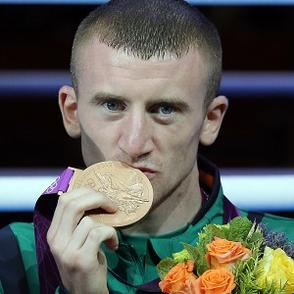
The eminent journalist and provocateur Eamonn Mallie has caused a small fuss in the last few days by condemning Northern Ireland's Olympic celebrations. Despite the fact that London 2012 saw the greatest ever success for Northern Irish sportsmen, he has argued in his blog that the province's celebration of their achievements was shamefully divided, with the Belfast boxers Paddy Barnes and Michael Conlan, who won bronze medals boxing for Ireland, being festooned in green, white and gold in Belfast, while the celebrations of the three Coleraine rowers, Alan Campbell and the Chambers brothers were to be decked out  in red, white and blue during their own hometown celebration.
You can listen to his despair on his website here:  http://eamonnmallie.com/2012/08/bigots-in-victory-too-how-pathetic-are/
This morning I was asked to contribute to the Stephen Nolan Show on Radio Ulster this morning, as a counterpoint to Eamonn. As I didn't really disagree with what he was saying I'm not sure I was a particularly enlightening contributor, but I thought it might be worth looking at his points in a little more detail here (it was a very brief discussion).
Eamonn argued that the achievements of the Olympians has been undermined by the sometimes begrudging reception they received, pointing out that the Dublin media had mostly ignored the achievements of the three rowers who were representing Team GB. He also wanted to know why there wasn't a joint celebration of all of Northern Ireland's Olympians, a celebration that didn't divide by flag.


My own brief contribution to the debate amounted to saying that that was indeed a good idea but to also say why shouldn't the boxers be celebrated in Belfast and the rowers in Coleraine? Why shouldn't they be acclaimed in their own communities? Isn't the challenge for Northern Ireland to get to the stage where we don't see one community's celebration as in some way diminishing for the other?
There is some talk of Stormont organising a large celebration of the province's Olympians following the completion of the Paralympics, which hopefully will address Eamonn's main contention - that each community is only celebrating its own and not embracing those from the other side. I hope that does indeed take place. In some senses it strikes me that this debate goes to the very heart of what I wanted to talk about in Whose Side Are You On? The idea that sport is and always has existed in a political framework, and as a result has been tugged and twisted to fit political agendas. That twisting and buckling is the story of Northern Irish sport over the last half century (and more).
But that's not the only story sport tells. It also reveals that sometimes we can find ourselves finding common cause with "the other side" through sporting heroes - from George Best to Dennis Taylor, Barry McGuigan to Alan Campbell and Paddy Barnes. It also tells us that sport can be used as a vehicle for attempting to heal divisions, whether it be in the work of grass roots organisations such as Peace Players International or in the way  local Irish League football clubs have forged associations with GAA clubs.
One of the points Eamonn made this morning was about symbolism. He reminded Radio Ulster listeners that the DUP First Minister Peter Robinson has gone to a GAA match and the Deputy First Minister Martin McGuinness has turned up at Windsor Park. These are symbols of politicians embracing the sporting environments of the other community. Sport allows for these gestures of reconciliation because it has so often been a point of division. It can be a vehicle for both.
There's another story that sport tells too, one that sometimes gets overlooked in Northern Ireland because we are so keyed to symbolism. That's the story sport tells about sport. The reasons why an Olympic celebration should matter in the first place is because of the efforts of five Olympians from the province. They may well have wanted to win a medal for the country they were representing but it's not difficult to imagine that in the first place they wanted to win a medal for themselves as a recognition of their own effort. Sportsmen and women are sportsmen and women because they love sport. Some may have political opinions, some may not. But those come second to the desire to compete. Sport is about competition first and foremost. The flags are an afterthought.

Sunday, 5 August 2012

George Best Bites His Nails

Last Monday night I went along to an open air cinema in Brunswick Street in Glasgow to watch a film I've wanted to see for years - Football Like Never Before, a 1971 German film about George Best in which the film-maker Hellmuth Costard used eight 16mm cameras to film Best during a game against Coventry City in 1970 - the same trick Glasgow artist Douglas Gordon would do with Zinedine Zidane more than 30 years later.


It's an interesting trick but one that does demand some endurance. Costard's film offered some aesthetic pleasures - the slab red of Best's top and socks popping on the screen against the green of the pitch, the raven blackness of his long hair and the way it matched his boots which, as the man behind me said, looked like winklepickers - but by the end of the game I wasn't really surprised that there was only myself and the organisers left (along with maybe a couple of people who had retreated to the outdoor seats at the Brunswick bar).
The film was rather at the whim of circumstances and the game Costard chose to shoot turned out to be a rather dreary one, especially in the first half. But for those of us who never got to see Best play live it offers a unique opportunity.
There's a good summary of the film here for those who want more details, but my own impressions were fragmentary. I was taken by how little the warm-up amounted to - basically George attempting a flick-kick if the ball came near him  - by the lack of football tops in the crowd (the early seventies, another world) and by the game's puritanism (Bobby Charlton gets a handshake when he scores and that's it. Best gets an arm in the mouth and he gets up, makes sure he's not bleeding and gets on with it).
But when I got tired of looking at the crowd or trying to identify who was playing for Coventry (I noticed WIlly Carr and Ernie Hunt which immediately made me think of trying to recreate their famous goal after seeing it on Match of the Day) I was left watching George and what struck me was how lonely he looked.


I'm trying not to project here. I'm trying not to read his future into this. But it is striking for how much of the game he is in the frame alone. He ambles about, making cursory tackles here and there, passing the ball when it comes to him, starting a run, getting tackled, falling over then waiting for the ball to come near him again.
Part of this isolation is down to the fact that he is on the periphery of the game for long stetches of course. In the second half he scores and sets up the Charlton goal and now and again you get a sense of what he was capable of as he accelerates from a standing start in huge lung-bursting surges past the pale blue Coventry shirts. Then again, the only time he seems to talk to any of his team mates is just before the second half kick-off and when he's not involved in the game he is biting his nails.
It all ties in with a remarkable sequence at half time when the camera cuts away from the game and we find ourselves in the back corridors of Old Trafford. This is clearly a different day because Best is now heavily stubbled, whereas he's clean shaven during the game. He walks in front of the camera and then turns and for a few minutes he is looking at us (or so it seems) as we look at him. He says nothing. The cameraman says nothing. It's a sequence that feels revelatory. Here is Best the man before us, exposed. Does he look uncomfortable? Does he look wounded?
Sorry, I'm projecting again. But I suppose that's what the film leaves you with. A fleeting sense of the man behind the myth. Yes, he was talented and yes, he was good-looking (there's no question that at times the film has almost homoerotic overtones as the camera repeatedly focuses on Best's thighs, his backside, the nape of his neck), but he was also human. He made the wrong decisions in games. He chose the wrong path. He got knocked down. But he got up again.
 It's the getting up again that makes you a sportsman, I guess.

Saturday, 4 August 2012

We shiver in the rain by the touchline ...


Coleraine Academical Institutution finished me as a sportsman. When I arrived in 1975 my previous high standing as captain of the Killowen Primary School football team counted for nothing. Mostly that's because Inst didn't play football. It was a grammar school. Rugby, cricket and rowing were its sports. And I was too weedy for rugby and rowing. I'd also had an unfortunate encounter with a real cricket ball a year or two earlier which has left me suspicious of the sport ever since.
In first year I stood on the touchline in a mustard yellow top hoping the rugby ball would come nowhere near me before eventually opting out of sport for the weekly run which over the years slowed to a leisurely stroll, dreams of a sporting future shrivelling with every step. By then I was more interested in comic books and movies anyway.
Clearly whatever resentment I might once have felt towards the school's anti-football tendency (and believe me, there were times when it made me livid. I mean, Killowen had won, oh I'd say, maybe two games under my captaincy) has faded because this week I was glued to the TV to watch the two Coleraine Inst "old boys" compete in the rowing at Eton Dorney. To see the emotion and sheer agony on Alan Campbell's face after the single sculls yesterday was to be reminded of the agony and ecstasy of sport. Sitting in a wheelchair trying to respond to John Inverdale's questions he looked in such pain it felt like a cruelty to watch him.
And yet today he can feel warmed by his achievement. And in the space of a couple of days my home town  can suddenly boast three Olympic medal winners and Coleraine's name has been appearing in national newspaper headlines, following the silver for the Chambers brothers, Richard (who also went to Inst) and Peter  in the lightweight four. All three once belonged to the Bann Rowing Club.
 Campbell and the Chambers Brothers will undoubtedly  receive some kind of civic reception in the near future. If it takes place in the Coleraine town hall they may pass by the statue of another sporting hero of the town, Bertie Peacock which has pride of place in the Diamond. Sport is a way of writing places into the popular consciousness. There are much worse ways. As Northern Ireland knows all too well.

Friday, 27 July 2012

Olympic Cycles

There are three Olympic stories told in Whose Side Are You On? The first is the most famous - the story of Mary Peters who left a bleak, bomb-blasted Belfast in 1972 to travel to Munich to compete in the Pentathlon. After two days of competition she returned to Northern Ireland with a gold medal hanging around her neck (and a death threat hanging over her head). Hers is the great Northern Irish Olympic story. The story of an athlete who pushed herself and pushed herself and got her rewards. I always think her success is underrated in the British Olympic story, given the paucity of facilities she had to train on in Belfast at the time and the violence that marked the city at that time (no mention, for example, in this morning's Radio Four Olympic montage).


Then there's Wayne McCullough's story. McCullough is one of Northern Ireland's best ever boxers, born and raised in the heart of Protestant Shankill.who represented Ireland - because boxing is organised on an all-island basis in Ireland - in the Seoul Olympics in 1988 at the age of 17. He was asked to carry the Irish flag at the opening ceremony and maybe was too young to realise how that would be perceived back in parts of Belfast.
The third story is the least well known, I guess. But I thought it's worth retelling here because it's a little cameo of the way sports stories are constantly at the mercy of politics. It concerns a cyclist called Noel Teggart, a lorry driver from Banbridge. Teggart was 31. He was representing Ireland, cycling, like boxing, being one of those sports organised on an all-island basis. Unfortunately there were other Irishmen in Munich  who were keen to make a protest. Members of the National Cycling Association, an organisation banned by the sport, wanted to make a protest against the "British occupation of Northern Ireland". To do so they hid in a ditch all night with the aim of then jumping up and interrupting the race.
Unfortunately, they didn't realise the race had been delayed for 24 hours. Still, they were back in the ditch 24 hours later and when it finally got underway they emerged from hiding, grabbed Teggart's bike and refused to let him move for a couple of minutes, by which time whatever chances he had in the race were long gone.
The story of cycling in Ireland after partition is a litany of organisations being banned and new organisations being formed usually along religious and political lines. Teggart was unfortunate in that his story was subsumed into this larger one.
And to little purpose in the end. Although the NCA's protest - although widely reported in Ireland, north and south - was largely ignored by the rest of the world. That's because the Palestinian Black September group had by then mounted their own protest by seizing Israeli athletes in the Olympic village. The siege ended in a gun battle that killed nine of the athletes. It remains the greatest disaster in Olympic history and the greatest stain on the Olympic ideal. The 40th anniversary of that tragedy is just around the corner.